


Every year, the World Artificial Intelligence Conference (WAIC) serves as a "mid-year industry barometer" for the humanoid robotics sector. This is especially true for 2026, a pivotal year for the large-scale deployment of humanoid robots in China, as the industry officially transitions from showcasing prototypes and competing on technical concepts to a new phase of mass production, industrial deployment, and commercialization across various scenarios.
Unlike general attendees who come to check it out and enjoy the spectacle, industry professionals, investors, supply chain experts, and R&D personnel attend the conference with a single core objective: to understand the true progress of the industry, identify reliable players capable of practical implementation, pinpoint supply chain opportunities, and forecast industry trends for the second half of the year.
The 2026 World Artificial Intelligence Conference, held in Shanghai from July 17 to July 20, specifically designated "Embodied Intelligence and Humanoid Robots" as a core track, placing it alongside "Intelligent Computing Power" as one of the two main exhibition zones. The event brought together over 200 upstream and downstream companies, featuring the global debut of new models, mass-production technologies, industrial deployment solutions, and new core components-making this edition far more substantial than previous ones.
This article outlines a detailed, actionable, and data-driven approach to visiting the exhibition, helping you avoid aimless wandering and stay fully focused on the industry's core value throughout your visit.
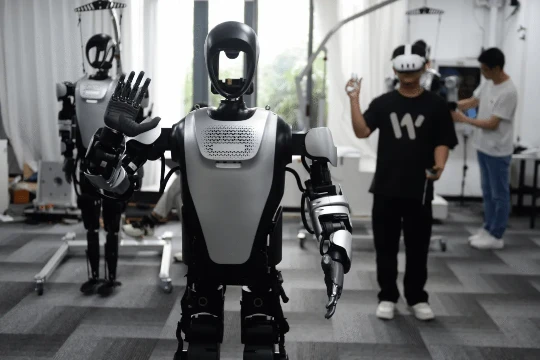
Set Core Conference Objectives: Targeted Approach for Four Key Audience Segments
Before attending, clearly define your objectives to avoid aimlessly wandering the exhibition. Professionals from different industries have completely different priorities, so precise targeting is essential for efficiently gathering information:
1. R&D and technical personnel: Focus on product iterations and performance gaps. Examine core technical parameters such as robot motion control, manipulator precision, the practical implementation of embodied large models, overall power consumption, response speed, and balance and stability. Compare the differences in technological advancements among leading manufacturers for the 2025–2026 period.
2. Supply chain professionals: Focus on demand and growth potential. Track the progress of domestic substitution for core components such as servo motors, gearboxes, sensors, lightweight chassis, batteries, and vision modules, and identify supply chain order opportunities arising from mass production.
3. Corporate marketing/product personnel: Focus on application scenarios and commercialization. Examine the actual operational workflows, implementation costs, suitable use cases, and customer pain points across the three major application scenarios-industrial smart manufacturing, public services, and commercial interaction-and benchmark against replicable commercialization solutions.
4. Industry Investors/Research Analysts: Focus on mass production and market barriers. Identify companies that have genuinely achieved large-scale mass production and are actively deployed in real-world settings; distinguish them from "PPT concept players"; and assess the industry's competitive landscape and emerging trends for the second half of the year.
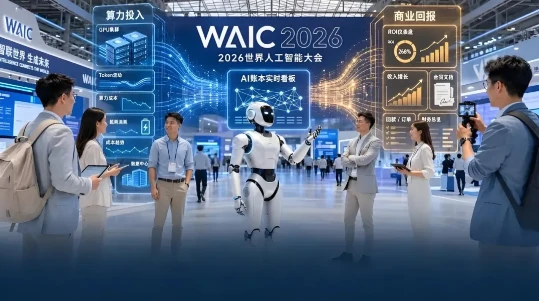
Core Layout of the Exhibition Area: Focus on the Main Area, Eliminate Inefficient Traffic Flow
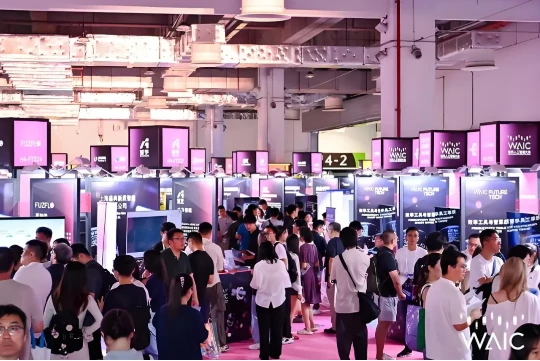
This year's WAIC features a highly concentrated selection of humanoid robot exhibits. There's no need to wander all over the venue-the main focus is Hall H3 of the Expo Exhibition Center, a dedicated pavilion for robots and embodied intelligence. It comprehensively covers the entire humanoid robot industry chain, ranging from core components, dexterous hands, and motion control systems to general-purpose humanoid robots, industrial models, and embodied intelligence applications. This is the primary venue for exploring the exhibition.
At the same time, the conference has created the "Era of Model Debut • City of Partners" immersive experience zone, divided into three major sections. This serves as the primary setting for observing real-world implementation capabilities, second only in priority to the main H3 exhibition hall:
1. Smart Manufacturing Workshop (Core of Industrial Deployment): Featuring a realistic small-scale automotive production line, this is the core exhibition area showcasing humanoid robots in industrial settings. Visitors can directly observe the robots' full range of industrial operational capabilities-including parts handling, battery assembly, and electronic control testing-to verify the feasibility of deployment in industrial scenarios.
2. Life Zone (Core of Civilian and Commercial Applications): A realistic smart street scene showcasing humanoid robots in everyday applications such as guide services for the visually impaired, domestic help, and community services, with a focus on adaptability and interaction capabilities in civilian scenarios.
3. Entertainment Hub (Reference for Technical Stability): An interactive robot penalty shootout scenario that allows for a direct comparison of leg movement speed and dynamic balance capabilities across different robot models, enabling an assessment of the maturity of their fundamental locomotion technologies.
Key Takeaways from the Exhibition: Understanding the True Progress of the 2026 Industry Across Five Dimensions
The greatest value of this exhibition lies in moving beyond conceptual demonstrations to comprehensively showcase mass production and implementation capabilities. Combining official data with forward-looking information from exhibitors, we break down the key highlights of the exhibition across five core dimensions, all of which align with the industry's real needs:
1. Mass Production of Complete Units: The Industry Officially Enters the 100,000-Unit Mass Production Era
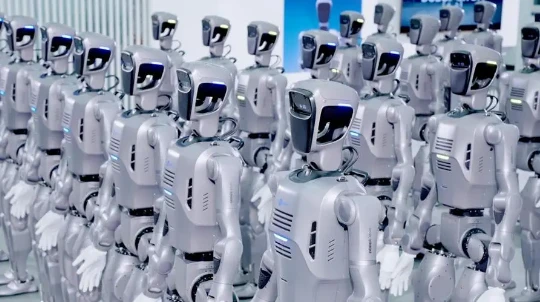
This marks the most critical inflection point for the humanoid robotics industry in 2026 and is the primary area of competition among all companies at this exhibition. According to official data released by the Ministry of Industry and Information Technology (MIIT), China's annual production of complete humanoid robots is expected to exceed 100,000 units in 2026, signaling that the industry has completely moved beyond the small-batch trial production phase and entered a cycle of large-scale mass production.
Key Tips for Visiting the Exhibition: Don't just focus on appearance and demonstrations; make sure to ask about and verify these three core mass-production metrics:
① Number of units already produced, monthly production capacity, and yield rate; ② Price range and delivery lead time for mass-produced models; ③ Number of partner companies where the robots have been deployed and the number of real-world operational scenarios.
Benchmark Reference: Zhiyuan Robotics is showcasing three new products at this event, less than a month after rolling off its 15,000th general-purpose embodied robot from mass production. As the industry's leading representative in mass production and deployment, its mass production delivery model and deployment system are key benchmarks to examine.
2. Industrial Deployment: From "Demonstration Movements" to "Working on the Factory Floor"
At previous exhibitions, humanoid robots primarily demonstrated actions such as walking and waving. This year's WAIC marks a groundbreaking breakthrough: multiple humanoid robots have been directly integrated into industrial production lines to complete end-to-end operational tasks.
When visiting the exhibition, focus on observing core industrial capabilities: whether the robots can adapt to precision industrial scenarios such as automotive manufacturing and reliably perform standardized processes like battery assembly, precise component handling, and electronic control testing; Compare the operational precision, error tolerance, and continuous operating time of different models to assess their practicality for industrial deployment-rather than merely their entertainment value.
Also, be sure to check out the Booster T2 humanoid robot. This model recently won the Robot World Cup championship, with leg movement speed and balance capabilities ranking among the world's best. A mini-soccer field has been set up on-site for penalty shootout matches, providing a vivid demonstration of the maturity of its dynamic motion technology.
3. Core Components: Domestic Substitution Enters a Critical Phase
The core bottleneck for the mass production and commercial deployment of humanoid robots has always been the domestic production of core components. Hall H3 brings together over 200 upstream and downstream companies to showcase core new products such as humanoid robots and AI-powered dexterous hands, making it the best window for observing the progress of domestic production.
Exhibition highlights focus on three high-value component sectors:
① Dexterous Grippers: Pay attention to lightweight design, multiple degrees of freedom, precise grasping capabilities, as well as mass production costs and failure rates; ② Servo Motors and Gearboxes: Compare domestic products in terms of power consumption, noise levels, service life, and compatibility with various robot models; ③ Vision Systems and Embodied Large Models: Examine AI-driven autonomous planning, environmental adaptability, and error-correction capabilities for complex tasks, moving away from reliance on manually controlled demonstrations.
Benchmark Highlights: New products such as Zhiyuan's Omnihand 3 Ultra-M dexterous gripper and Digu's S600 vision perception module offer key opportunities to compare the technical differences and mass-production suitability of various component solutions.
4. Trends Among Leading Players: Track the Iteration Directions of the Industry's Top Tier
This exhibition brings together China's leading humanoid robotics companies. All new product iterations, strategic directions, and implementation priorities will directly shape industry trends for the second half of 2026. Pay close attention to key exhibitors: mainstream robot manufacturers such as Zhiyuan, Yushu, Xingdong Jiyuan, and Galaxy General, as well as a host of specialized component suppliers.
Key Approach to the Exhibition: Don't focus on what's "coolest"; focus on what's "most practical." Make a point of documenting each company's key product updates, application focus (industrial/commercial/consumer), supply chain openness policies, and partnership models to precisely align with your own business needs.
5. Technological Evolution: From "Motor Skills" to "Thinking and Working Capabilities"
2026 marks the inaugural year for the practical application of embodied intelligence in humanoid robots, with the industry's core competitive logic shifting from "motor skills" to "integrated cognitive and executive capabilities." This exhibition highlights the deep integration of large language models with humanoid robots. Robots are no longer merely executing pre-programmed actions; instead, they can autonomously perceive their environment, plan tasks, and adapt to complex scenarios by correcting errors.
Exhibition Evaluation Criteria: High-quality models should be capable of autonomous operation without remote control, adapt flexibly to various scenarios, and not require fixed locations or fixed workflows-demonstrating the true attributes of general-purpose robots.
Advanced Exhibition-Visiting Methodology: 3 Practical Tips to Gain Deeper Insights into Industry Trends Than Others
1. Distinguish Between "Demo Performance" and "Mass Production Capability"
Smooth demonstrations at trade shows only represent the upper limit of the technology; true industrial value lies in the lower limit of mass production. At the event, focus on asking: Are the demonstrated features already integrated into mass-produced models currently on the market? Is bulk delivery supported? Are there real-world customer case studies for specific application scenarios? Avoid being misled by a single flashy demonstration.
2. Focus on Documenting "Costs and Pain Points," Not Just Advantages
The humanoid robotics industry still faces pain points such as high power consumption, insufficient lightweight design, poor stability in extreme environments, and high component costs. While touring the exhibition, actively document each manufacturer's candid admissions of technical shortcomings, optimization plans, and cost-reduction strategies. This information serves as the core basis for assessing a company's long-term competitiveness and is more valuable than promotional highlights.
3. Target Upstream and Downstream Resources Strategically
Robot manufacturers should prioritize partnering with high-quality domestic component suppliers to reduce mass production costs; component manufacturers should focus on aligning with the iterative needs of leading robot manufacturers to support new product development; and application providers should prioritize selecting highly stable, cost-effective models to expand commercial and industrial deployment scenarios.
Quick Debrief After Visiting a Trade Show: Share Industry-Specific Insights
After the conference, you can quickly organize valuable information across three key dimensions to create a customized industry report, thereby maximizing the value of your participation:
1. Summary of Technological Iterations: Identify the core upgrades for humanoid robots in 2026 in the areas of motion control, dexterous manipulation, embodied AI, lightweight design, and low power consumption;
2. Industry Landscape Summary: Identify the mass production timelines of leading manufacturers, the differentiation among market tiers, and the latest progress in domestic substitution;
3. Opportunities and Pain Points Summary: Identify incremental opportunities in the supply chain, blue-ocean markets for application deployment, existing core bottlenecks in the industry, and future directions for breakthroughs.
Appendix: Conference Information
Dates: July 17–20
Venue: Shanghai World Expo Exhibition & Convention Center (Main Exhibition Area, Hall H3) / Zhangjiang / West Bund-"Three Locations, Four Venues"
Must-See Areas: Hall H3 Complete Machines and Components Exhibition Area, "Smart Manufacturing Workshop" Industrial Demonstration Area, Embodied Intelligence Forum on the afternoon of July 19 (Conference Room 2, Level B2)
Tickets: The only official ticketing channel is the "Hi WAIC" app; single-day exhibition tickets start at 168 yuan
Shuttle Service: Free shuttle buses operate between the four venues across the three locations, running approximately every 10 minutes; last departure at 6:30 PM
Evening Events: Evening events such as QuantumBit's "Truth Circle" on the evening of July 17 (registration required)