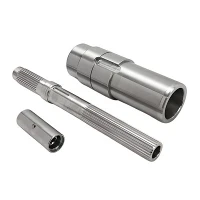

In the dynamic landscape of robotics, the continuous evolution of technology demands that existing robot reducer manipulators be upgraded to meet the ever - increasing performance requirements. As a supplier of Robot Reducer Manipulator, I am well - versed in the various upgrade options available for these crucial components.
1. Upgrade of Reduction Ratio
One of the primary upgrade options for an existing robot reducer manipulator is to alter its reduction ratio. The reduction ratio plays a vital role in determining the torque and speed characteristics of the manipulator. A higher reduction ratio can significantly increase the torque output of the manipulator, allowing it to handle heavier loads. This is particularly beneficial in industrial applications where the robot needs to lift and manipulate large and heavy objects.
For example, in an automotive manufacturing plant, a robot with a higher - reduction - ratio reducer manipulator can efficiently handle engine blocks and other heavy components. On the other hand, a lower reduction ratio can enhance the speed of the manipulator, making it more suitable for applications that require rapid movements, such as pick - and - place operations in a high - speed assembly line.
To achieve this upgrade, the existing reducer can be replaced with a new one that has the desired reduction ratio. However, this process requires careful consideration of the mechanical compatibility between the new reducer and the existing manipulator structure. It is also essential to ensure that the motor driving the manipulator can provide sufficient power to operate the new reducer effectively.
2. Improvement of Gear Quality
The quality of gears in a robot reducer manipulator has a direct impact on its performance and durability. Upgrading the gears can lead to several benefits, including reduced noise, increased efficiency, and longer service life.
High - quality gears are typically made from advanced materials such as alloy steels or ceramics. These materials offer better wear resistance and can withstand higher loads and stresses. For instance, ceramic gears have a lower coefficient of friction, which reduces energy losses and heat generation during operation.
In addition to material selection, the manufacturing process of the gears also plays a crucial role. Precision machining techniques, such as grinding and honing, can ensure that the gears have accurate tooth profiles and smooth surfaces. This results in smoother gear meshing, which in turn reduces vibration and noise.
As a supplier, we offer a range of high - quality gears for robot reducer manipulators. Our gears are manufactured using state - of - the - art technology and undergo strict quality control measures to ensure optimal performance.


3. Integration of Advanced Sensors
The integration of advanced sensors is another significant upgrade option for robot reducer manipulators. Sensors can provide real - time feedback on various parameters such as position, force, and torque, enabling the manipulator to perform more precise and adaptive tasks.
Position sensors, such as encoders, can accurately measure the position of the manipulator's joints. This information can be used to improve the accuracy of the robot's movements, especially in applications that require high - precision positioning, such as micro - assembly.
Force sensors can detect the force exerted by the manipulator on an object. This is useful in applications where the robot needs to interact with delicate or fragile objects. For example, in a food packaging line, a force - sensing manipulator can handle food products without causing damage.
Torque sensors can monitor the torque applied to the reducer, which helps in preventing overloading and optimizing the energy consumption of the manipulator. By integrating these sensors, the robot can operate more efficiently and safely.
4. Upgrading the Control System
The control system of a robot reducer manipulator is responsible for coordinating its movements and ensuring its proper operation. Upgrading the control system can enhance the performance and functionality of the manipulator.
Modern control systems are often based on advanced algorithms and software that can provide more precise control over the manipulator's movements. For example, a PID (Proportional - Integral - Derivative) controller can adjust the speed and position of the manipulator in real - time, based on the feedback from the sensors.
In addition, the control system can be integrated with a human - machine interface (HMI), which allows operators to easily program and monitor the robot's operations. This improves the user - friendliness of the manipulator and reduces the training time for operators.
As a supplier, we offer control system upgrade solutions that are compatible with a wide range of robot reducer manipulators. Our control systems are designed to be flexible and scalable, allowing for future expansion and customization.
5. Enhancement of Cable Management
Proper cable management is essential for the reliable operation of a robot reducer manipulator. Upgrading the cable management system can prevent cable damage, reduce interference, and improve the overall appearance of the manipulator.
Cable Management Bracket for Robot Body Frame is an effective solution for organizing and securing cables. These brackets can be installed on the Robot Body Frame Link to keep the cables in place and prevent them from getting tangled or damaged during the manipulator's movements.
In addition, the use of high - quality cables with proper shielding can reduce electromagnetic interference (EMI), which can affect the performance of the sensors and control system. Upgrading the cable management system can also make it easier to maintain and replace the cables when necessary.
Conclusion
In conclusion, there are several upgrade options available for existing robot reducer manipulators. Whether it is upgrading the reduction ratio, improving the gear quality, integrating advanced sensors, upgrading the control system, or enhancing the cable management, each option can contribute to improving the performance, efficiency, and reliability of the manipulator.
As a supplier of Robot Reducer Manipulator, we are committed to providing our customers with the best upgrade solutions. Our team of experts can help you assess your specific needs and recommend the most suitable upgrade options for your existing robot reducer manipulator.
If you are interested in upgrading your robot reducer manipulator or have any questions about our products and services, please feel free to contact us for a detailed consultation and procurement discussion. We look forward to working with you to enhance the performance of your robotics systems.
References
- Smith, J. (2020). Robotics: Principles and Applications. New York: Wiley.
- Johnson, M. (2019). Advanced Control Systems for Robotic Manipulators. London: Springer.
- Brown, A. (2018). Gear Design and Manufacturing. Chicago: McGraw - Hill.