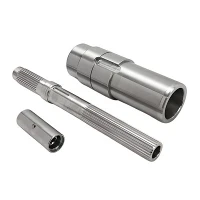

As a seasoned supplier of robot flanges, I've witnessed firsthand the pivotal role these components play in the smooth operation of robotic systems. A robot flange serves as a crucial interface between the robot arm and end - effector, facilitating power transmission, motion control, and overall functionality. However, like any mechanical part, robot flanges are prone to certain common failures that can disrupt robotic operations. In this blog, I'll delve into these common failures, their causes, and potential solutions.
Wear and Tear
One of the most prevalent issues with robot flanges is wear and tear. Constant movement, high - speed operations, and heavy loads can cause the flange's surfaces to degrade over time. This wear can manifest in various forms, such as surface abrasion, pitting, and deformation.
Surface abrasion occurs when the flange rubs against other components during operation. This can be exacerbated by the presence of debris or contaminants in the operating environment. For example, in industrial settings where dust and metal shavings are common, the flange's surface can quickly become worn down. Pitting, on the other hand, is often caused by corrosion or the repeated impact of small particles. This can weaken the flange's structure and lead to premature failure.
Deformation is another consequence of wear and tear. When a flange is subjected to excessive loads or uneven forces, it may bend or warp. This can affect the alignment of the end - effector, leading to inaccurate movements and reduced precision in robotic tasks.
To mitigate wear and tear, regular maintenance is essential. This includes cleaning the flange to remove debris, lubricating moving parts to reduce friction, and inspecting for signs of wear. Additionally, using high - quality materials and coatings can enhance the flange's durability and resistance to wear.
Misalignment
Misalignment is a significant problem that can occur in robot flanges. It can happen during installation, due to improper handling, or as a result of mechanical stress over time. Misalignment can lead to uneven loading on the flange, causing premature wear and potential failure.
There are two main types of misalignment: angular and parallel. Angular misalignment occurs when the flange is not perpendicular to the robot arm or end - effector. This can cause the forces to be distributed unevenly, leading to excessive stress on certain parts of the flange. Parallel misalignment, on the other hand, happens when the flange is not parallel to the mating surface. This can result in a loose connection, which can cause vibrations and instability during operation.
To prevent misalignment, proper installation is crucial. It is important to follow the manufacturer's guidelines and use the appropriate tools and techniques. Additionally, regular inspections should be carried out to detect and correct any misalignment issues early on.
Fatigue Failure
Fatigue failure is a common concern in robot flanges, especially in applications where the flange is subjected to cyclic loading. Cyclic loading occurs when the flange experiences repeated stress over time, such as in continuous robotic operations.
Over time, the repeated stress can cause microscopic cracks to form in the flange's material. These cracks can propagate and eventually lead to a complete failure of the flange. Fatigue failure is often difficult to detect because the cracks may not be visible until they have reached a critical size.
To prevent fatigue failure, it is important to design the flange with the appropriate material and geometry to withstand the expected cyclic loads. Additionally, monitoring the operating conditions and implementing a preventive maintenance program can help detect and address potential fatigue issues before they lead to failure.
Corrosion
Corrosion is another common failure mode for robot flanges, especially in harsh environments. Corrosion can occur when the flange is exposed to moisture, chemicals, or other corrosive substances.
There are several types of corrosion, including uniform corrosion, pitting corrosion, and galvanic corrosion. Uniform corrosion occurs when the entire surface of the flange is corroded at a relatively uniform rate. Pitting corrosion, as mentioned earlier, is characterized by the formation of small pits on the surface of the flange. Galvanic corrosion occurs when two different metals are in contact in the presence of an electrolyte, causing one metal to corrode preferentially.
To prevent corrosion, it is important to select the appropriate material for the flange based on the operating environment. For example, stainless steel is a popular choice for its corrosion - resistant properties. Additionally, applying protective coatings or finishes can help prevent corrosion.
Connection Loosening
The connection between the robot flange and the robot arm or end - effector is critical for the proper functioning of the robotic system. However, over time, the connection can loosen due to vibrations, thermal expansion and contraction, or improper tightening.
A loose connection can lead to a loss of precision, increased vibrations, and potential damage to the flange and other components. To prevent connection loosening, it is important to use the appropriate fasteners and torque specifications during installation. Regular inspections should also be carried out to check the tightness of the connection.
Solutions and Recommendations
To address these common failures, we, as a robot flange supplier, offer a range of solutions. We provide high - quality robot flanges made from durable materials, such as stainless steel and alloy steel, to ensure resistance to wear, corrosion, and fatigue. Our flanges are designed with precision to minimize misalignment and ensure a secure connection.
We also offer comprehensive maintenance services, including cleaning, lubrication, and inspection. Our team of experts can provide guidance on proper installation and maintenance procedures to help extend the lifespan of the robot flanges.
In addition to our standard products, we also offer customized solutions to meet the specific needs of our customers. Whether you need a flange with a unique shape, size, or material, we can work with you to develop a solution that fits your requirements.


Related Products
If you're looking for other components to complement your robot flange, we recommend checking out the following products:
- Robot Reducer Manipulator: This product plays a crucial role in the motion control of the robot, working in tandem with the flange to ensure smooth and precise movements.
- Robot Body Frame Link: The body frame link provides structural support for the robot, and a proper connection with the flange is essential for the overall stability of the robotic system.
- Cable Management Bracket for Robot Body Frame: This bracket helps organize and protect the cables in the robot body frame, ensuring reliable power and signal transmission.
Contact Us for Procurement
If you're interested in purchasing our robot flanges or have any questions about our products and services, we encourage you to reach out to us. Our team of sales representatives is ready to assist you with your procurement needs. We can provide detailed product information, pricing, and delivery options. Don't hesitate to contact us for a quote or to discuss your specific requirements.
References
- Machinery's Handbook, 31st Edition, Industrial Press Inc.
- Robotics: Modelling, Planning and Control, Bruno Siciliano, Lorenzo Sciavicco, Luigi Villani, and Giuseppe Oriolo.