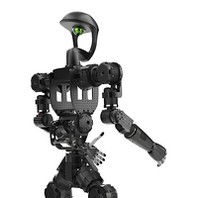

As a provider of humanoid robot skeletons, I've witnessed firsthand the remarkable capabilities of these mechanical marvels. Humanoid robot skeletons are the backbone of humanoid robots, enabling them to perform a wide range of complex tasks with precision and efficiency. In this blog post, I'll delve into how a humanoid robot skeleton handles complex tasks, exploring the key components and technologies that make it possible.
Understanding the Basics of a Humanoid Robot Skeleton
A humanoid robot skeleton is designed to mimic the structure and movement of the human body. It consists of a series of interconnected joints and links that allow the robot to move in a way that is similar to a human. These joints are typically powered by motors and actuators, which provide the necessary force and torque to move the robot's limbs.
The skeleton of a humanoid robot is typically made up of several key components, including the torso, arms, legs, and head. Each of these components is designed to perform specific functions and work together to enable the robot to move and interact with its environment.
Key Components of a Humanoid Robot Skeleton
1. Joints and Actuators
Joints are the critical points in the robot's skeleton where movement occurs. They allow the robot to bend, rotate, and flex its limbs, just like a human. Actuators are the devices that power these joints, providing the necessary force and torque to move the robot's limbs. There are several types of actuators used in humanoid robot skeletons, including electric motors, hydraulic actuators, and pneumatic actuators.
Electric motors are the most common type of actuator used in humanoid robots. They are relatively small, lightweight, and easy to control. Hydraulic actuators, on the other hand, are more powerful and can provide a greater amount of force. Pneumatic actuators are also used in some humanoid robots, particularly in applications where a high degree of precision is required.
2. Structural Parts
The structural parts of a humanoid robot skeleton provide the framework and support for the robot's joints and actuators. These parts are typically made of lightweight materials such as aluminum or carbon fiber, which help to reduce the overall weight of the robot.
The Robot Structural Parts are designed to be strong and rigid, while also being flexible enough to allow for a wide range of movement. They are typically connected to each other using bolts, screws, or other fasteners, and are designed to withstand the forces and stresses generated by the robot's movement.
3. Chassis Parts
The chassis of a humanoid robot is the base structure that supports the robot's body and provides a platform for the robot's joints and actuators. The Robot Chassis Parts are typically made of a combination of metal and plastic materials, and are designed to be strong, lightweight, and durable.
The chassis of a humanoid robot is also responsible for housing the robot's power supply, control system, and other electronic components. It is designed to provide a stable and secure platform for these components, while also allowing for easy access and maintenance.
4. Flanges
Flanges are used to connect the various components of the robot's skeleton together. They are typically made of metal or plastic, and are designed to provide a strong and secure connection between the joints and the structural parts of the robot.


The Robot Flange is an important component of the robot's skeleton, as it helps to ensure that the joints and structural parts are properly aligned and connected. It also helps to distribute the forces and stresses generated by the robot's movement evenly across the skeleton, reducing the risk of damage or failure.
How a Humanoid Robot Skeleton Handles Complex Tasks
1. Movement and Locomotion
One of the most important tasks that a humanoid robot skeleton must be able to perform is movement and locomotion. This involves the ability to walk, run, climb, and perform other types of movements in a variety of environments.
To achieve this, the robot's skeleton must be designed to be flexible and agile, while also being strong and stable. The joints and actuators must be able to provide the necessary force and torque to move the robot's limbs, and the structural parts must be able to withstand the forces and stresses generated by the robot's movement.
2. Manipulation and Grasping
Another important task that a humanoid robot skeleton must be able to perform is manipulation and grasping. This involves the ability to pick up, hold, and manipulate objects in a variety of ways.
To achieve this, the robot's skeleton must be designed to have a high degree of dexterity and precision. The joints and actuators must be able to provide the necessary force and control to manipulate objects, and the hands and fingers must be designed to be able to grasp and hold objects securely.
3. Sensory Perception
In order to perform complex tasks, a humanoid robot skeleton must be able to sense its environment and interact with it in a meaningful way. This involves the use of a variety of sensors, such as cameras, microphones, and touch sensors, to gather information about the robot's surroundings.
The robot's skeleton must be designed to support these sensors and provide a stable platform for them to operate. The sensors must be able to provide accurate and reliable information about the robot's environment, and the robot's control system must be able to process this information and make decisions based on it.
4. Control and Coordination
Finally, a humanoid robot skeleton must be able to control and coordinate its movements and actions in a way that is efficient and effective. This involves the use of a sophisticated control system that is able to process the information gathered by the sensors and generate the appropriate commands to the joints and actuators.
The control system must be able to adapt to changes in the robot's environment and adjust its movements and actions accordingly. It must also be able to coordinate the movements of the robot's limbs and body in a way that is smooth and natural.
Conclusion
In conclusion, a humanoid robot skeleton is a complex and sophisticated piece of engineering that is capable of handling a wide range of complex tasks. By combining the latest technologies in robotics, materials science, and control systems, humanoid robot skeletons are able to perform tasks that were previously thought to be impossible.
As a provider of humanoid robot skeletons, we are committed to providing our customers with the highest quality products and services. We have a team of experienced engineers and technicians who are dedicated to designing and manufacturing the best humanoid robot skeletons on the market.
If you are interested in learning more about our humanoid robot skeletons or would like to discuss a potential project, please contact us. We would be happy to answer any questions you may have and provide you with more information about our products and services.
References
- Siciliano, B., & Khatib, O. (Eds.). (2016). Springer handbook of robotics. Springer.
- Breazeal, C. (2002). Designing sociable robots. MIT press.
- Asada, M., & MacKenzie, K. R. (Eds.). (1992). Human motor control. Oxford University Press.