

Products

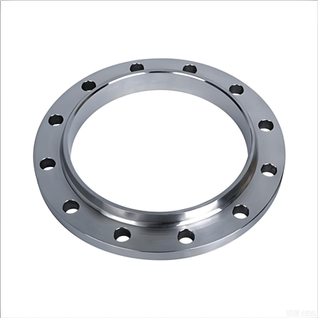
Robot Joint Module End Cap
Robot joint module end cap | Protection & Integrated End Solutions
| Endpoint Protection & System Integration
| Ensures the integrity and reliability of joint modules
Product Brief
As a manufacturer with core technology in the field of precision face structure and sealing component processing, we focus on the comprehensive precision manufacturing of end caps (end caps, output end caps, motor end caps) of key end components of robot joint modules. We provide full-process machining solutions from high-strength aluminum alloys, stainless steel, and special composite materials, covering various end cap components for industrial robots, collaborative robots, and special robot joint modules. We deeply understand its multiple functions in seal protection, bearing support, output connection, signal transmission and heat dissipation management, as well as the strict requirements for plane seal accuracy, installation coaxiality, structural rigidity, impact resistance and environmental resistance, and are committed to achieving excellent protection performance, exceptional connection accuracy and long service life through precision machining technology and advanced surface engineering.
Core Advantages
1. Integrated processing of high-precision end face seal and bearing support structure
① The multi-stage composite seal structure is precisely formed
Using customized molding tools and five-axis linkage engraving technology, the precision machining of multiple sealing features such as radial O-ring grooves, end face sealing gasket grooves, labyrinth dust-proof structures and rotary shaft lip seal mounting holes of the end caps is completed in one clamping, and the size tolerance of the sealing groove is controlled at ±0.015mm, and the rounded corners are smooth and burr-free, providing reliable protection for IP65/IP67/IP69K and other high protection levels.
② High-precision bearing holes are machined synchronously with the output interface
On the precision CNC lathe or turning-milling composite center, the bearing mounting hole, output flange connection surface and
The processing of the fixed stop is to ensure that the bearing bore is coaxial with the output flange Degree ≤ Φ0.008mm (≤Φ0.015mm), end face runout ≤0.005𝗆𝗆 , providing accurate terminal support for the transmission system.
③ Integrated sensor and cable interfaces are precision-manufactured
Precision-machined built-in encoder/Hall sensor mounting cavity, signal connector interface and multi-channel waterproof cable gland mounting hole ensure the positioning accuracy and sealing reliability of the electrical interface to meet the needs of modular quick plugging.
2. Lightweight reinforced structure and dynamic performance optimization
① Topology optimization of rib plate and thin-walled structure anti-deformation processing
According to the results of finite element analysis, high-speed milling technology is used to accurately realize the internal asymmetric stiffener and optimal material distribution structure, which minimizes the weight (weight control accuracy) while ensuring the overall rigidity and impact resistance of the end cap ±1% ).
② Local reinforcement of the high-load bolted connection area
For the key stressed areas such as the perimeter of the output flange bolt hole, the end cap and the connection surface of the body, the local material thickening design and processing are carried out, and the threaded hole extrusion strengthening or sleeve treatment is implemented to greatly improve the fatigue strength and fretting wear resistance of the connection.
③ Dynamic balance integrated design and deduplication processing
For high-speed rotating output end caps, dynamic balancing adjustment structures (such as de-weighting grooves and counterweight block mounting positions) can be integrated, and component-level dynamic balancing can be realized through precision machining to meet the requirements of low vibration under high-speed operation.
3. Thermal management and surface function integration
① Integrated cooling fins and coolant interface processing
On the motor end cap or high-power consumption end cap, the radial heat dissipation fin or the flat runner that matches the cooling plate is directly processed, and the coolant inlet and outlet threaded interface is precisely machined to achieve efficient active heat dissipation.
② Multi-functional surface treatment is integrated
It provides a variety of surface treatment options such as hard anodizing (thickness 30-50μm, hardness ≥HV400), micro-arc oxidation, Teflon coating, laser marking, etc., to meet the comprehensive needs of corrosion resistance, wear resistance, insulation, and identification at one time.
4. Full-dimensional quality verification and data delivery
① Simulation and measurement verification of sealing performance
Fluid simulation is used to analyze the rationality of the seal structure, and each batch of products is tested for holding pressure or helium mass spectrometry leakage detection at specified pressure (pneumatic/hydraulic) to ensure seal reliability and provide authoritative test reports.
② 3D scanning and assembly simulation
The blue light 3D scanner is used to obtain high-precision point cloud data of the finished end cap, compare and analyze with the customer's original design model, generate 3D chromatographic deviation map, and support virtual assembly verification.
③ Digital full inspection package delivery
Use high-precision coordinate measuring machines, roundness meters, and roughness meters to carry out key dimensions, shape and position tolerances, and sealing surface quality 100% Full inspection, delivery of a complete digital data package including 2D drawing annotation report, 3D deviation map and material certificate.
Technical Parameter
| End Cap Type | Functional Positioning & Structural Features | Typical Materials | Core Manufacturing Challenges |
|
Output End Cap (Flange End Cap) |
The final output interface of the joint, connecting tools or the next connecting rod, bearing all working loads and impacts. | High-strength aluminum alloy (7075-T6 forged), alloy steel (42CrMo tempered) | High precision and high strength of the output flange, high dimensional accuracy of bearing holes (form and position tolerance), impact-resistant structure. |
| Motor End Cap (Non-drive End Cap) | Sealing the motor module, supporting the rear bearing of the motor, integrating encoder and brake interfaces, with high heat dissipation requirements. | Aluminum alloy (A356-T6 die-cast, 6061-T6), stainless steel (304) | Stop fit for thin-walled motor housing, sealing and precision of multiple electrical interfaces, efficient heat dissipation structure. |
| Harmonic Reducer End Cap (Wave Generator End Cap) | Sealing the harmonic reducer, supporting the input shaft bearing, with compact structure and extremely high centering requirements. | Aluminum alloy (7075), stainless steel (17-4PH) | Ultra-high coaxiality requirements (between wave generator and output), multiple seals in a tiny space. |
| Protective End Cap (Waterproof/Dustproof) | Used in harsh environments, emphasizing extreme sealing protection, may integrate pressure balance valves. | Stainless steel (316L), titanium alloy (TC4), engineering plastic (PEEK) | Complex redundant sealing structure, special material processing, compliance with industry-specific certifications (e.g., classification society). |
| Quick-Change Module End Cap | Used for fast automatic replacement of tools or modules, integrating gas/liquid/electric quick connectors. | High-strength aluminum alloy, stainless steel (combined use) | Precise positioning and sealing of multi-medium interfaces, high-strength locking mechanism, high wear resistance requirements. |
- We machine robot joint module end caps from customer drawings, 3D files, samples, or technical specs.
- End cap profile, thickness, end-face structure, mounting holes, and locating holes can be customized.
- Center bore, bearing seat, and output-end fit dimensions can be adjusted to match the joint module assembly space.
- Sealing surfaces, grooves, steps, and connection features can be made to project requirements.
- Machining plans are developed around the functional needs of the assembly surface, support surface, and sealing surface.

Quality Control

Lorem ipsum dolor, sit amet consectetur adipisicing elit. Repellendus aperiam,
Production follows ISO 9001, AS9100, and IATF 16949 quality management requirements. Key inspection items include end-face flatness, hole position accuracy, center bore size, bearing seat accuracy, sealing surface precision, concentricity, and visual defects.
Inspection reports can be provided on request. Third-party inspection by domestic or international agencies is also supported.
Frequently Asked Questions
What information is needed for a custom robot joint module end cap quotation?
-
Please provide drawings, 3D files, material requirements, surface treatment requirements, quantity, and application details. If there are matching joint modules or assembly interface requirements, these can also be shared.
Can we order samples for testing first?
-
Yes. We support sample development, so customers can check assembly fit, sealing performance, and dimensions before small-batch or volume production.
What is the MOQ?
-
The standard MOQ is 10 pieces. For sample testing, small-batch trial production, or future volume orders, the quantity can be discussed case by case.
How long does sample development take?
-
Usually 7–45 working days, depending on end cap complexity, material, machining process, and surface treatment requirements.
Can you support both small-batch trials and mass production?
-
Yes. We can support sample development, small-batch validation, and volume production according to your project schedule, while keeping stable production quality for repeat orders.
Hot Tags: robot joint module end cap, China robot joint module end cap manufacturers, suppliers, factory