

Products
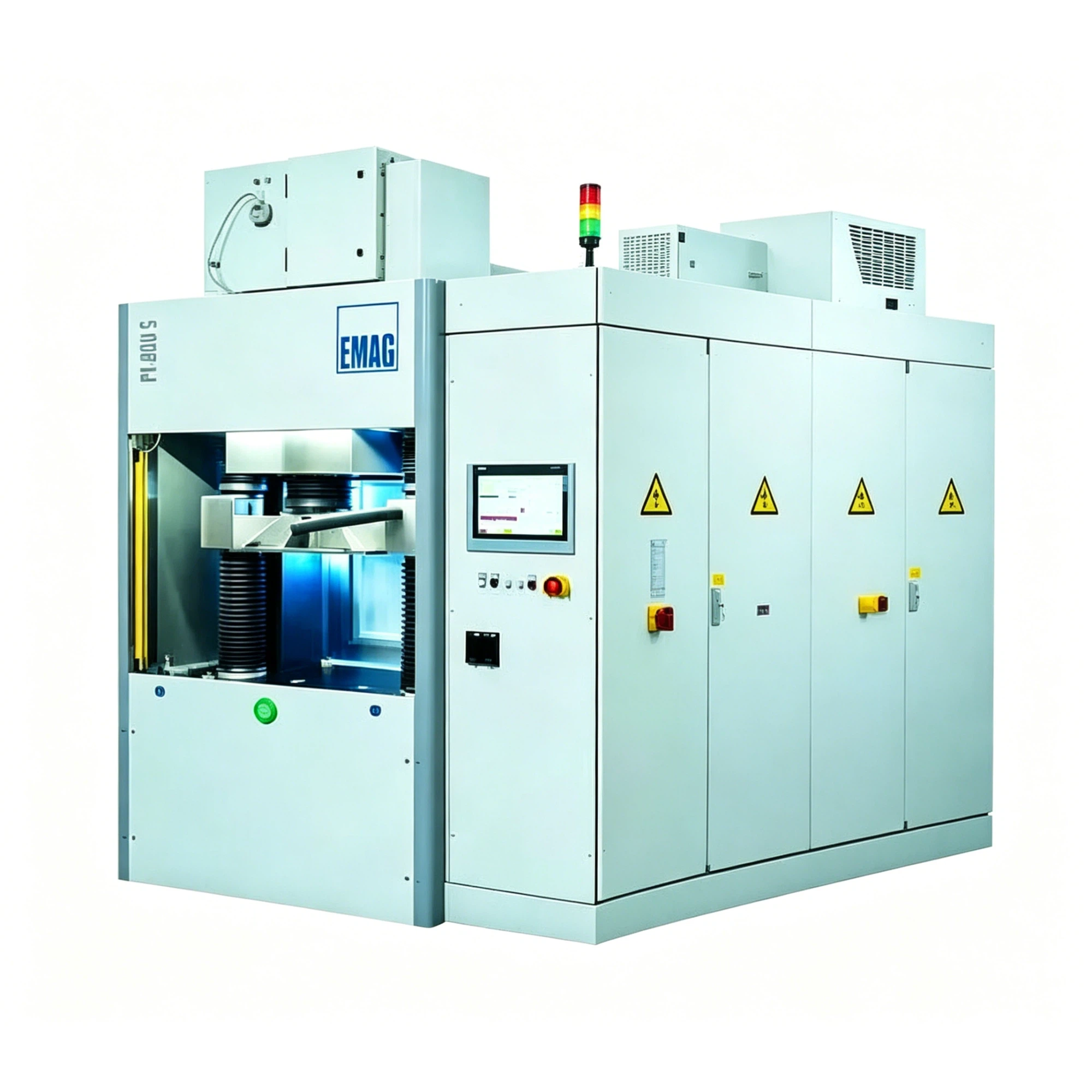
Precision Electrochemical Machining
Precision Electrochemical Machining |
Core Solutions for Microstructure Machining of Special Materials
Product Brief
As a manufacturer with core technologies in the fields of special electrochemical machining and microstructure manufacturing, we provide professional precision electrochemical machining services , focusing on the high-precision manufacturing of various conductive and difficult-to-machine materials, complex three-dimensional cavities, micropore arrays, and functional surfaces.
We possess a complete technological system, encompassing pulsed power supplies, CNC machine tools, and specialized electrolyte formulations, covering cutting-edge manufacturing fields such as aero-engine blades, medical implant surface textures, fuel cell bipolar plates, precision mold textures, and MEMS devices. We deeply understand the extreme requirements for stress-free, burr-free, heat-affected zone-free, and highly repeatable processing under challenges such as material sensitivity, structural complexity, surface integrity, and batch consistency. We are committed to achieving superior structural accuracy, excellent surface properties, and efficient mass production capabilities through the integration of advanced electrochemical dissolution principles, multiphysics simulation, and precise process control.
Core Advantages
(1) Machining of complex three-dimensional structures and fine features
① The precision forming of three-dimensional cavities and free-form surfaces
adopts CNC cathode scanning and adaptive electrolyte flow field control technology to achieve precise replication and processing of three-dimensional structures such as turbine blade cooling film holes, complex mold cavities, and irregular flow channels. The surface contour accuracy is ≤0.01mm, the surface roughness Ra≤0.2μm, and there are no recast layers or microcracks.
② High-efficiency machining of micro-holes and irregular hole arrays:
It can process micro-holes with a diameter of Φ0.05-Φ2.0mm and a depth-to-diameter ratio (the depth-to-diameter ratio can reach 50:1), as well as square holes, conical holes, and irregular hole arrays. The verticality of the hole wall is ≥89°, and the hole opening is burr-free and rounded. It is suitable for precision parts such as fuel nozzles, screen plates, and heat exchangers.
③ Integrated molding of functional surface microtextures
: Through masking or scanning electrochemical processing, regular textures such as micropits, microgrooves, and cross grids are directly formed on the surface of parts. The feature size is 10-500μm and the depth accuracy is ±2μm, which can achieve specific functions such as friction reduction, anti-adhesion and enhanced heat transfer.
(2) Non-destructive processing technology for difficult-to-machine materials
① High-efficiency stress-free machining of high-temperature alloys and titanium alloys
: For difficult-to-machine materials such as Inconel 718 and Ti6Al4V, the principle of electrochemical anodic dissolution is used to achieve a material removal rate of 1-5 mm³/min. There is no mechanical stress or thermal stress during the machining process, and there is no heat-affected zone on the workpiece surface, thus maintaining the original mechanical properties of the material.
② Precision forming of cemented carbide and cermet:
Complex cavity machining of superhard conductive materials such as YG-type cemented carbide and cermet avoids the risk of chipping and cracking in traditional machining. The machining accuracy is ±0.005mm, the surface quality is excellent, and the service life of the mold is extended.
③ Deformation control of thin-walled and weakly rigid parts:
For thin-walled structures or slender weakly rigid parts with a wall thickness ≤ 0.2 mm, non-contact electrochemical machining can completely eliminate the deformation problem caused by cutting force, and the shape accuracy can be controlled within 0.01 mm.
(3) Intelligent process control and online monitoring
① The multi-parameter adaptive closed-loop control system
integrates real-time monitoring and feedback adjustment of current density, electrolyte parameters, and inter-electrode gap. It automatically optimizes parameters such as voltage and pulse frequency according to the processing status to ensure processing stability and consistency. The dimensional dispersion of batch-produced parts is ≤ ±0.002mm.
② Multi-physics simulation optimization of the processing
: COMSOL and other software are used to perform coupled simulation of electrolyte flow field, electric field and temperature field, predict material removal profile and surface morphology, optimize cathode design and process parameters, reduce the number of trials and errors and improve the first-piece success rate.
③ Online visual monitoring and adaptive compensation
configuration: High-resolution endoscope and machine vision system are configured to observe the status of the processing area in real time. Combined with edge detection algorithm, the processing dimensions are measured online to realize automatic compensation and abnormal early warning of the processing process.
(4) Green manufacturing and surface integrity control
① Environmentally friendly electrolyte formula and recycling system:
We independently developed a low-concentration, low-corrosive, biodegradable special electrolyte system, combined with a high-efficiency filtration and regeneration system, to achieve an electrolyte recycling rate of ≥95% and reduce processing waste emissions by more than 80%.
② The active surface integrity control technology
can actively control the microstructure and chemical state of the processed surface by adjusting the pulse parameters and electrolyte composition, and can obtain mirror surface (Ra≤0.05μm), controllable roughness surface or specific chemically active surface.
③ Integrated surface passivation and protection after processing
: For materials such as stainless steel and titanium alloys, a dense passivation film is generated on the surface of the part in situ by adjusting the composition and potential of the electrolyte at the end of the processing stage, which improves corrosion resistance and reduces subsequent processing steps.
Technical Parameter
|
Part type |
Main features and typical applications |
Machinable materials |
Core processing advantages |
|
aircraft engine turbine blades |
Complex three-dimensional cooling film pores and irregularly shaped internal cavities; the material is a difficult-to-machine high-temperature alloy; and it is required to be free of recast layers and microcracks. |
Nickel-based superalloys (Inconel 718, CMSX-4), titanium alloys (TC4) |
No heat-affected zone, maintaining the material's high-temperature performance, complex hole patterns formed in one step. |
|
Medical implant surface texture |
Micrometer-scale regular texture (grooves, pit arrays); requiring excellent biocompatibility and bone integration properties. |
Titanium alloy (CP-Ti, Ti6Al4V), cobalt-chromium alloy (CoCrMo) |
No mechanical damage, precise control of surface morphology and chemical state, clean production environment |
|
Fuel cell metal bipolar plates |
Microchannel arrays (channel width 0.2-1mm); requiring high conductivity and corrosion resistance; high batch production consistency. |
316L stainless steel, titanium alloy, surface-modified metal |
High batch production efficiency, excellent consistency of flow channel dimensions, and controllable surface activity after processing. |
|
Precision mold surface texture |
Complex decorative textures (leather grain, wood grain, geometric patterns); requiring clear textures, no seams, and high surface quality. |
Mold steel (P20, H13), stainless steel, copper alloy |
Replicates any complex texture, with no surface stress and extended mold life. |
|
MEMS devices and microfluidic chips |
Micrometer-scale fine structures (cantilever beams, microcavities, microchannels); diverse materials; requiring high dimensional accuracy and surface quality. |
Silicon, glass, thin metal films, special alloys |
High processing resolution (down to submicron), wide material adaptability, and low batch production cost. |

customization capabilities
- OEM and ODM manufacturing support;
- Machining based on customer drawings, 3D models, or physical samples;
- Prototype development, small-batch trial production, and volume manufacturing;
- Processing of various conductive metals and difficult-to-machine materials;
- Machining of complex cavities, micro holes, gear profiles, grooves, end faces, and functional surfaces;
- Control of dimensional accuracy, surface roughness, and geometric tolerances according to project requirements;
- Support for process optimization, inspection validation, and batch delivery.
We design suitable packaging solutions according to the structure, size, surface requirements, and shipping method of precision ECM components. The goal is to reduce the risk of impact, scratches, moisture, and corrosion during transportation.
Common packaging options include:
- Individual or grouped protective packaging to prevent parts from rubbing against each other;
- Extra protection for critical areas such as high-precision surfaces, sealing faces, gear profiles, and hole locations;
- Use of anti-rust oil, VCI paper, desiccants, or vacuum packaging when required;
- Cartons, wooden cases, pallets, or reinforced packaging depending on part weight and shipping distance;
- Export-ready packa

Frequently Asked Questions
Do you offer custom manufacturing for precision ECM components?
-
Yes. We provide custom precision electrochemical machining services based on customer drawings, samples, 3D models, or technical requirements. Our services cover prototype development, small-batch trial production, and volume manufacturing.
Can you manufacture parts according to our drawings or samples?
-
Yes. Customers can provide 2D drawings, 3D models, physical samples, or technical specifications. Our engineering team will evaluate manufacturability based on the material, structure, accuracy requirements, tolerances, and surface finish requirements.
What is the minimum order quantity?
-
The typical minimum order quantity is 10 pieces. The exact MOQ can be discussed flexibly depending on the part structure, material, machining difficulty, and project requirements.
Can you make samples before mass production?
-
Yes. We can provide samples or prototypes before mass production, allowing customers to verify dimensions, check assembly fit, conduct functional testing, and confirm the manufacturing process.
How are the products packaged for export?
-
We determine the packaging method based on the product material, structure, precision requirements, and shipping method. Common options include anti-rust treatment, individual protection, foam cushioning, vacuum packaging, cartons, wooden cases, and pallet packaging. Critical areas such as high-precision surfaces, sealing faces, and fragile sections are given additional protection.
Hot Tags: precision electrochemical machining, China precision electrochemical machining manufacturers, suppliers, factory, processing technology, laser processing, laser machining process, process of technology, machining technology, cnc processing