


Foreword
±0.005mm tolerance, single-step electrochemical machining, 100% traceability-we are not just an ordinary machining shop. Backed by a research institute, we possess a full range of manufacturing equipment, including imported lathes, 3-, 4-, and 5-axis machining centers, electrochemical machining (ECM) centers, EDM machines, wire EDM machines, laser welding systems, and gear hobbing/shaping machines, as well as a comprehensive inspection system comprising Zeiss coordinate measuring machines and GOM blue light inspection systems. We are certified to ISO 9001, IATF 16949, and AS9100D. We focus on three areas: humanoid robots, aerospace, and medical devices.
Humanoid robot
Component Types:
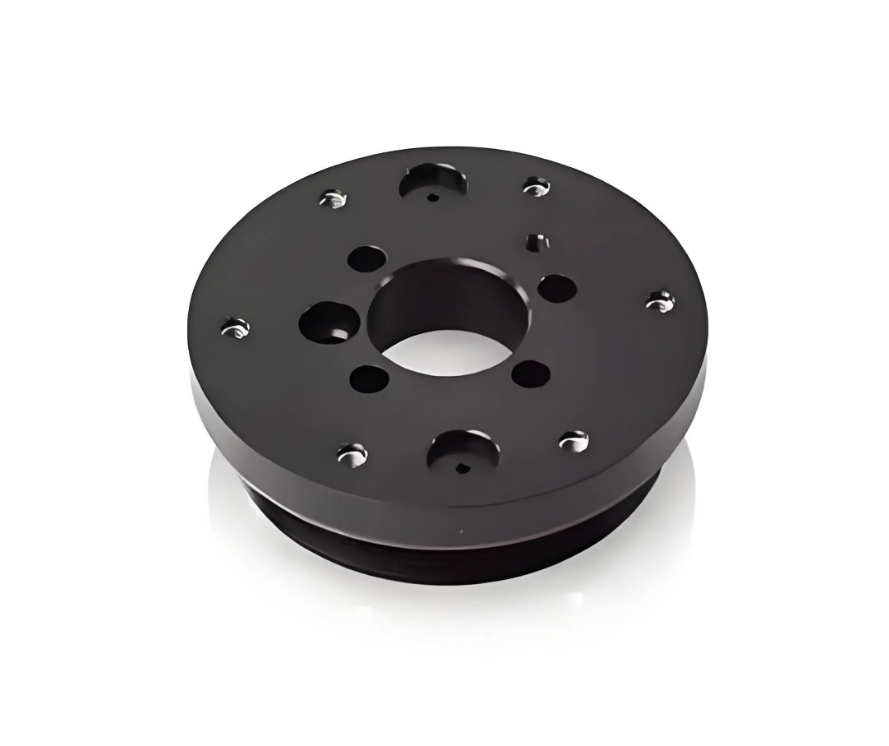
Planetary Carriers, Output Flanges, Rotor Supports, Enclosures, End Caps.
Key Technical Difficulties:
High-precision assembly based on complex dimensional stack-ups.
Distortion control for thin-walled parts (1.0–2.5mm) during clamping.
Stringent mass-production stability (CPK ≥ 1.33).
High-strength materials: 7075-T6 Al / 40Cr Steel.
Machining Resources:
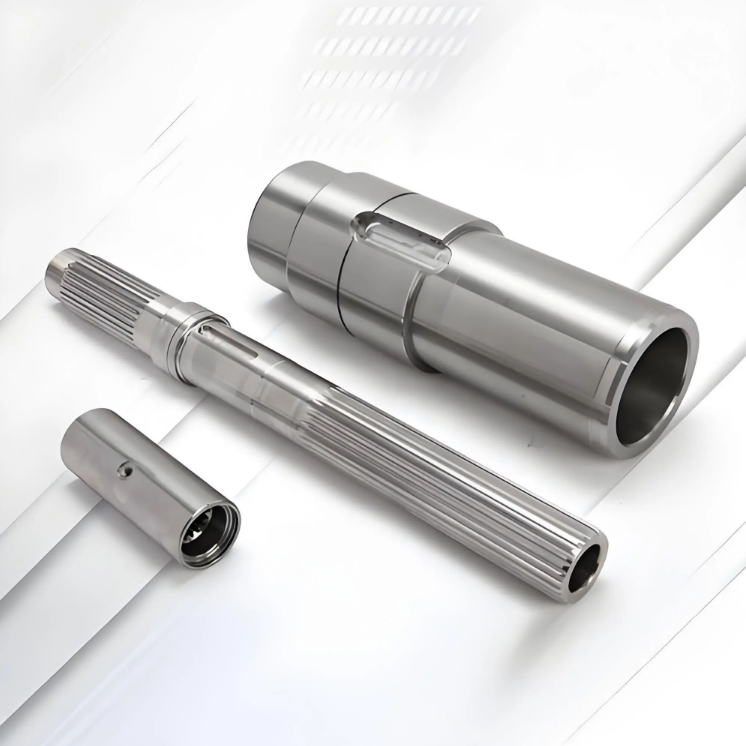
Precision Lathes: Shafts and flanges.
Multi-axis Machining Centers (3/4/5-axis): Irregular apertures and side profiles.
High-precision Slow-speed Wire EDM: Complex slotting and fine-finishing.
Case 1: Planetary Carrier
1. Technical Challenges:
True Position Tolerance: The position tolerance for the three sets of planet gear shaft holes is required to be within Φ0.01 mm.
Cylindricity: The cylindricity of the shaft holes must be within 0.003 mm.
Material Characteristics: Made of 7075-T6 aluminum alloy; highly susceptible to deformation caused by residual stress release after machining.
2. Process Route:
Rough Machining (Machining Center - Stock Removal) → Aging Treatment (Stress Relief) → Finish Machining (Machining Center - Shaft Holes & End Faces) → Slow-speed WEDM (Critical Slots) → Full CMM Inspection (Coordinate Measuring Machine)
3. Solutions
| Challenges | Solutions | Results |
| True Position of 3 Holes (Φ0.01mm) | Machining all shaft holes in a single setup to eliminate repetitive positioning errors. | Measured Position ≤ Φ0.008mm |
| Cylindricity (0.003mm) | Utilizing PCD reamers combined with constant temperature cutting (20±1°C). | Measured Cylindricity: 0.0025mm |
| Machining Deformation | Implementing stress-relief aging (180°C × 4h) after rough machining. | Deformation reduced from 0.03mm to 0.008mm |
4. Delivery
Production Capacity: 800 units/month
Yield Rate: 94%
CPK: 1.38
Case 2: Output Flange
1. Technical Challenges:
End face runout: 0.005 mm
Mating surface roughness: Ra 0.4
True position of threaded holes: Φ0.05 mm
2. Process Route:
Turning (End Face + OD + ID) → MC Milling (Threaded Holes + Locating Slots) → Deburring → Cleaning → 100% Inspection
3. Solutions
| Challenges | Solutions | Results |
| End face runout: 0.005mm | Turning end face and mating surfaces in a single setup. | Measured runout: 0.003mm |
| Surface roughness: Ra 0.4 | Utilizing CBN inserts and high-rigidity lathes. | Measured Ra: 0.32 |
| True position of threaded holes | 5-axis milling using thread mills. | Measured position: ≤ Φ0.03mm |
4. Delivery
Production Capacity: 1,200 units/month
Yield Rate: 96%
Case 3: Rotor Carrier
1. Technical Challenges:
Dynamic balance requirement: Grade G2.5 (High-speed rotating component).
Complex geometry: Multiple irregular weight-reduction slots.
High vibration risk: Non-uniform wall thickness during machining.
2. Process Route:
Lathe Rough Machining (Profile + Weight-reduction Slots) → Aging → Finish Machining (Datums + Bearing Seats) → Dynamic Balancing Test → 100% Inspection
3. Solutions
| Challenges | Solutions | Results |
| G2.5 Dynamic Balancing | Reserving material for balancing correction; performing micro-adjustments based on dynamic balancer measurements. | Measured: Grade G1.6 |
| Irregular Weight-reduction Slots | 5-axis simultaneous machining using customized tapered ball-nose end mills. | Single-pass forming with no tool marks. |
| Machining Vibration | Filling thin-walled regions with low-melting-point alloy for auxiliary support. | Improved surface quality with no chatter marks. |
4. Delivery
Production Capacity: 600 units/month
Yield Rate: 97%
Aerospace
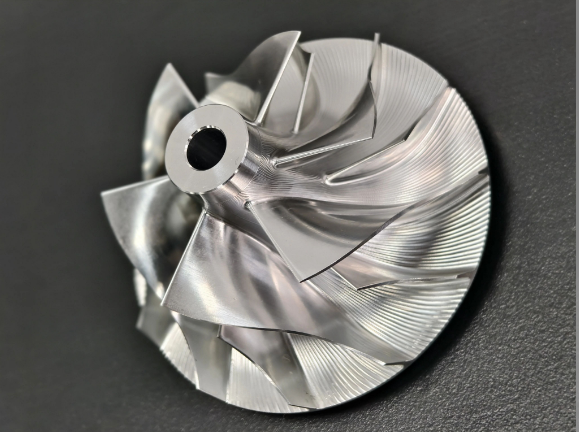
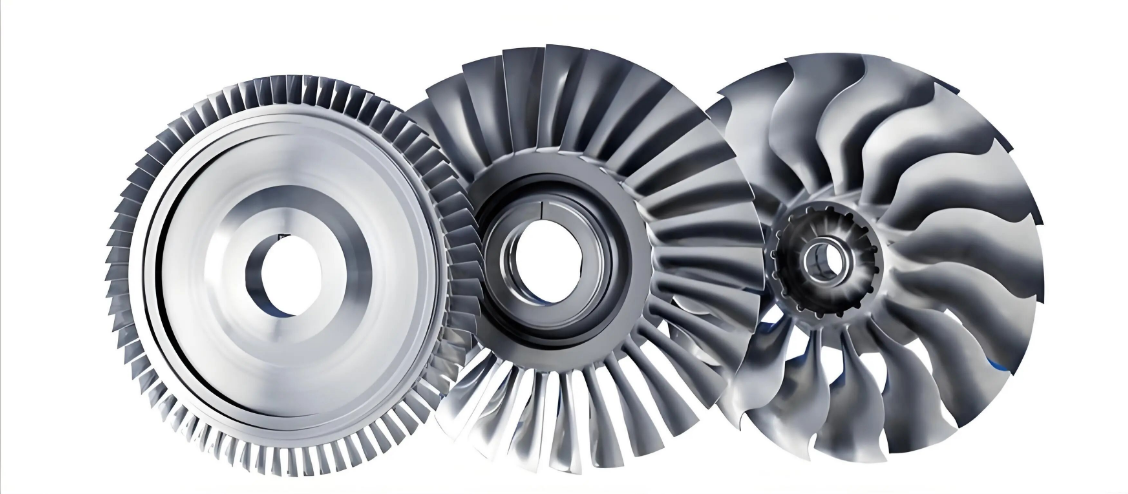
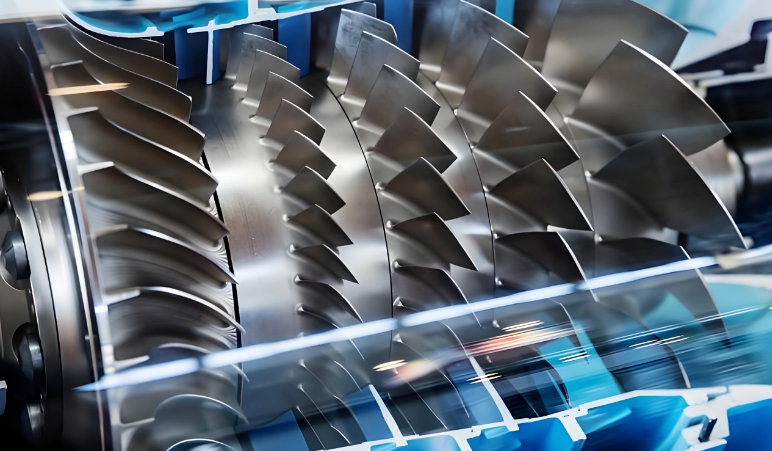
Parts include blades, integral impellers, integral hub assemblies, intake grilles, engine casings, and more.
Case 1: Blades
Direct Machining via Electrochemical Machining (ECM) Center
1. Technical Challenges:
Complex Geometry: Blade profiles are free-form surfaces with a stringent profile tolerance requirement of ±0.025 mm.
Material Hardness: Primarily Titanium Alloy TC4 and Superalloy GH4169; traditional milling leads to excessive tool wear and the risk of forming a recast layer.
Ultra-thin Edges: Leading and trailing edges are only 0.1–0.3 mm thick, making them highly susceptible to deformation or thermal burn-through.
2. Advantages of the ECM Process:
Zero Tool Wear: The cathode is subject to no physical wear, allowing for long-term use after a single design phase.
Superior Material Integrity: Process involves no cutting heat, no mechanical stress, and is completely recast-layer-free.
High Surface Quality: Surface roughness can achieve Ra < 0.1 μm.
Material Versatility: Capable of machining any difficult-to-cut metallic materials, regardless of hardness.
3. Process Route
Cathode Design (based on digital model) → ECM Roughing (85% stock removal) → ECM Finishing (Final profile) → Cleaning → Full CMM Inspection
4. Solutions
| Challenges | Solutions | Results |
| Free-form Surface Profile | Inverse cathode design + Pulsed ECM (PECM) | Measured profile: ≤ 0.018mm |
| Thin Edge Machining (0.2mm) | Low voltage + short pulse to control dissolution rate | Intact edges with no over-etching |
| GH4169 Difficulty | Non-contact ECM machining, independent of material hardness | 3x efficiency increase compared to milling |
| Surface Integrity | Smooth surface naturally obtained via ECM with no micro-cracks | Measured Ra 0.08μm; recast-layer-free |
5. Inspection Methods
ZEISS CMM: Blade profile scanning and generation of point cloud comparison maps.
GOM Blue Light Scanning: Full-dimensional scanning and generation of CAD deviation color maps.
6. Delivery
Batch Capacity: 200 units/month (typical blade length: 80mm).
Lead Time: 15 working days (after cathode readiness).
First-Pass Yield (FPY): 99%
Case 2: Blisk (Integrally Bladed Rotor)
5-Axis Simultaneous Machining
1. Technical Challenges:
Deep and narrow flow channels: Max aspect ratio of 10:1, leading to poor tool accessibility.
Thin-walled blades: Minimum thickness of 0.8mm, posing a high risk of machining vibration.
Materials: TC4 Titanium Alloy / 7075 Aluminum Alloy.
2. Process Route:
5-Axis Rough Machining (Large-diameter tool roughing) → Stress-relief Aging → 5-Axis Finish Machining (Blades + Flow channels) → Localized Manual Polishing → Full CMM Inspection
3. Solutions
| Challenges | Solutions | Results |
| Deep & Narrow Flow Channels | Customized long-neck tapered ball-end mills (L/D ratio 12:1) + trochoidal milling. | No interference; smooth flow channels. |
| Thin-walled Blade Vibration | Low radial depth of cut (0.1mm) + high-speed machining (HSM). | No chatter marks; uniform wall thickness. |
| Surface Profile Tolerance | Hybrid strategy of 5-axis flank milling and point milling. | Measured profile tolerance: ≤ 0.02mm. |
4. Delivery
Typical Specification: Φ150mm Impeller
Batch Capacity: 30 units/month
Lead Time: 20 working days
Yield Rate: 96%
Case 3: Intake Duct Grille
ECM One-step Forming
1. Technical Challenges:
Dense grid structure: Grid wall thickness of 0.5mm with 1.5mm spacing.
Extreme aspect ratio (>20:1): Impossible to process using traditional milling.
Surface finish: Inner wall roughness requirement of Ra 0.8.
2. Process Route:
ECM One-step Forming (Cathode designed for simultaneous machining of all grids) → Cleaning → Inspection
3. Solutions
| Challenges | Solutions | Results |
| Dense Grid Machining | Multi-aperture cathode design for simultaneous machining of all grids. | Cycle time per unit: < 10 mins |
| Aspect Ratio Limitations | Non-contact ECM process; not restricted by machining depth. | Grid depth up to 50mm+ |
| Inner Wall Roughness | Naturally smooth surface finish inherently achieved via ECM. | Measured Ra: 0.6–0.8μm |
4. Delivery
Production Capacity: 50 units/month
Yield Rate: 99%
Medical Devices
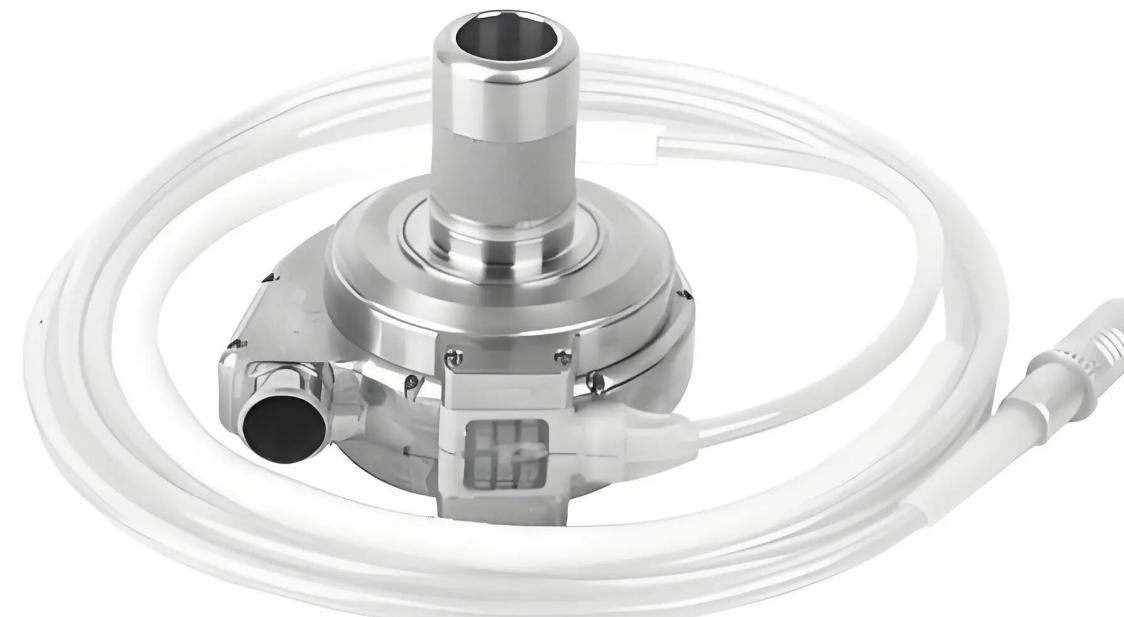
Case Study: Artificial Heart (Ventricular Pump)
1. Technical Challenges:
Surface Roughness: Flow channel requirement of Ra ≤ 0.1 μm (critical to prevent thrombosis/blood clot formation).
Material & Biocompatibility: TC4 Titanium Alloy with stringent biocompatibility standards.
Complex Geometry: Intricate internal flow channels that are impossible to machine directly via conventional mechanical methods.
2. Advantages of the ECM Process:
Seamless Integration: One-step machining of the entire flow channel with no seams.
Ultra-fine Finish: Surface roughness achievable between Ra 0.05–0.08 μm.
High Integrity: Completely free of tool marks and micro-cracks.
3. Process Route:
5-Axis Rough Machining (Datums + Outer Profile) → ECM Finish Machining (Flow Channels) → Ultrasonic Cleaning → Cleanroom Packaging
4. Solutions
| Challenges | Solutions | Results |
| Flow Channel Ra ≤ 0.1 μm | Non-contact ECM; inverse electrode forming. | Measured Ra: 0.06–0.08 μm |
| Complex Flow Channel Forming | One-step machining with profiling electrodes. | Seamless; no tool marks. |
| Biocompatibility | Pure water-based electrolyte + ultrasonic cleaning. | Passed cytotoxicity testing. |
| Full-dimensional Inspection | GOM blue light scanning + 3D digital comparison. | Deviation from CAD model: ≤ 0.02 mm |
5. Delivery
Batch Capacity: 20 sets/month (Pump body + Impeller)
Lead Time: 25 working days (including electrode design and manufacturing)
Yield Rate: 95%
Our Core Capabilities
- Machining Precision: ±0.005mm (Standard) / ±0.001mm (Specific)
- Surface Roughness: Ra 0.05μm (ECM Mirror Grade)
- Key Equipment: Imported lathes, imported 3/4/5-axis machining centers, imported EDM, imported ECM machining centers, slow-speed WEDM, laser welding, gear broaching machines, and gear hobbing machines.
- Inspection Equipment: ZEISS CMM, GOM blue light scanners, roughness testers, etc.
- Material Capabilities: Titanium alloys (TC4/TC4 ELI), Superalloys (GH4169), Aluminum alloys (7075/6061), 40CrNiMoA, and Stainless steel (17-4/316L).
- Certification Systems: ISO9001 / IATF 16949 / AS9100D
- Technical Endorsement: Supported by research institutes, shared process databases, and an Academician Workstation.
- Specialized Process: ECM (Electrochemical Machining) integral forming.
Our Service Commitments
Drawing Evaluation: Manufacturability (DFM) analysis response within 2 hours.
Quotation: Official quotation issued within 24 hours.
Expedited Prototyping: 3–5 working days (for simple parts).
Confidentiality: NDA signed; drawings used exclusively for quotation and production purposes.