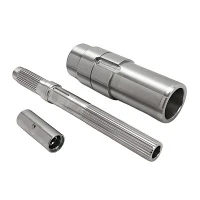

Hey there! As a supplier of Robot Reducer Output Shafts, I often get asked about the over - speed protection mechanism for these shafts. So, let's dive right into it and break down what this is all about.
First off, what exactly is the robot reducer output shaft? Well, it's a crucial part of the robot's motion system. The Robot Reducer Output Shaft is responsible for transferring the power from the reducer to the end - effector or other moving parts of the robot. It has to handle a lot of torque and rotational forces, and that's where over - speed protection comes in.
Over - speed can be a real headache for the robot's performance and longevity. When the output shaft spins too fast, it can lead to excessive wear and tear on the shaft itself, as well as on other components in the reducer. This can cause mechanical failures, such as gear damage, bearing failure, and even breakage of the output shaft.
So, how do we protect against over - speed? There are several mechanisms that can be employed.
1. Mechanical Over - speed Clutches
One of the most common methods is using mechanical over - speed clutches. These clutches are designed to disengage when the rotational speed of the output shaft exceeds a pre - set limit. It's like a safety valve for the shaft. When the speed gets too high, the clutch separates the power source from the output shaft, preventing further acceleration.
The way it works is based on centrifugal force. Inside the clutch, there are weights that are attached to springs. As the shaft spins, the weights are forced outwards by the centrifugal force. When the speed reaches the critical point, the weights overcome the spring force and cause the clutch to disengage. This simple yet effective mechanism has been used in many industrial applications for decades.
2. Electronic Speed Sensors and Controllers
Another popular approach is using electronic speed sensors and controllers. These systems continuously monitor the rotational speed of the output shaft. The speed sensor sends signals to the controller, which then compares the actual speed with the set speed limit.
If the speed goes above the limit, the controller can take several actions. It can reduce the power supply to the motor, which in turn slows down the output shaft. Some controllers can also send an alarm signal to the operator, indicating that there is an over - speed situation.
The advantage of electronic systems is their high precision and flexibility. They can be easily programmed to adapt to different operating conditions and speed limits. For example, in a robot that performs different tasks with varying speed requirements, the controller can be adjusted accordingly.
3. Gear Ratio Limitations
The design of the reducer itself can also play a role in over - speed protection. By carefully selecting the gear ratio, we can limit the maximum speed of the output shaft. For instance, if we use a Planetary Carrier and Robot Reducer Planet Gears in the reducer, the gear ratio can be set in such a way that the output shaft cannot exceed a certain speed.
This is because the gear ratio determines the relationship between the input speed (from the motor) and the output speed (of the shaft). A lower gear ratio will result in a lower output speed, providing a natural limit to the speed of the output shaft.


4. Braking Systems
Braking systems can also be used as an over - speed protection mechanism. There are different types of brakes, such as electromagnetic brakes and mechanical brakes.
Electromagnetic brakes work by using an electromagnetic field to create friction and stop the rotation of the output shaft. When the speed exceeds the limit, the brake is activated, and it quickly slows down the shaft. Mechanical brakes, on the other hand, use physical components like pads or shoes to create friction and stop the shaft.
These braking systems can be integrated into the robot's control system, so they can be activated automatically when an over - speed situation is detected.
Why Over - Speed Protection is Crucial
Now, you might be wondering why all this over - speed protection stuff is so important. Well, for starters, it helps to extend the lifespan of the robot reducer output shaft and other components. By preventing over - speed, we reduce the stress and wear on the shaft, which means fewer breakdowns and less maintenance.
It also improves the safety of the robot. An over - speeding output shaft can cause the robot to behave erratically, which can be dangerous for the operators and the surrounding environment. With proper over - speed protection, we can ensure that the robot operates within a safe speed range.
Our Role as a Supplier
As a supplier of Robot Reducer Output Shaft, we understand the importance of over - speed protection. That's why we offer shafts that are designed to work well with different over - speed protection mechanisms.
We can provide technical support to our customers, helping them choose the right over - speed protection system for their specific applications. Whether it's a mechanical clutch, an electronic controller, or a braking system, we can guide you through the selection process.
If you're in the market for high - quality Robot Reducer Output Shafts and need to implement an over - speed protection mechanism, we're here to help. We have a wide range of products that can meet your requirements, and our team of experts is always ready to answer your questions.
So, if you're interested in learning more about our products or discussing your over - speed protection needs, don't hesitate to reach out. We're looking forward to working with you and helping you keep your robots running smoothly and safely.
References
- "Industrial Robotics: Technology, Programming, and Applications" by Peter Corke
- "Mechanical Design Handbook" by Robert C. Juvinall and Kurt M. Marshek